Pass it on · Uncle Steve

Uncle Steve. Professionally.

I'm not a parent and you'll get no parenting advice from me. I'm a DNA uncle to my niece and a non-DNA Uncle Steve to a growing crew of kids whose parents are my mates, and I take the job seriously. Every kid needs a significant adult in their corner. I needed one at twelve.

No DNA required
Steve, hand up, sitting at a school desk in a blazer and tie.
No DNA required
Uncle is a role you earn by showing up.
One afternoon
A retro game built together, playable on a phone.
Ages 3 to 18
And the significant adults who love them.
Free for schools
Always.

What this is actually about

Presence. The rest is vegetables.

The adults I admire most give kids their whole attention, and the kids know it. My mate Lizi with her son Harley is next-level at it, and a big reason this exists. What gets remembered isn't the amount of time. It's whether you were actually there for it.

So I build things that make being there easy. Technology is the bridge, not the bad guy. Build a video game together and they think you made a game. Underneath, they learnt logic, systems and how to iterate. And you both got an afternoon you'll still be talking about at Christmas.

My niece asked me on the weekend how she could earn some money. We spent the afternoon working out what she could sell, who to, and for how much. Business lesson, maths lesson, memory. She'd tell you it was just a chat with Uncle Steve. That's the job.

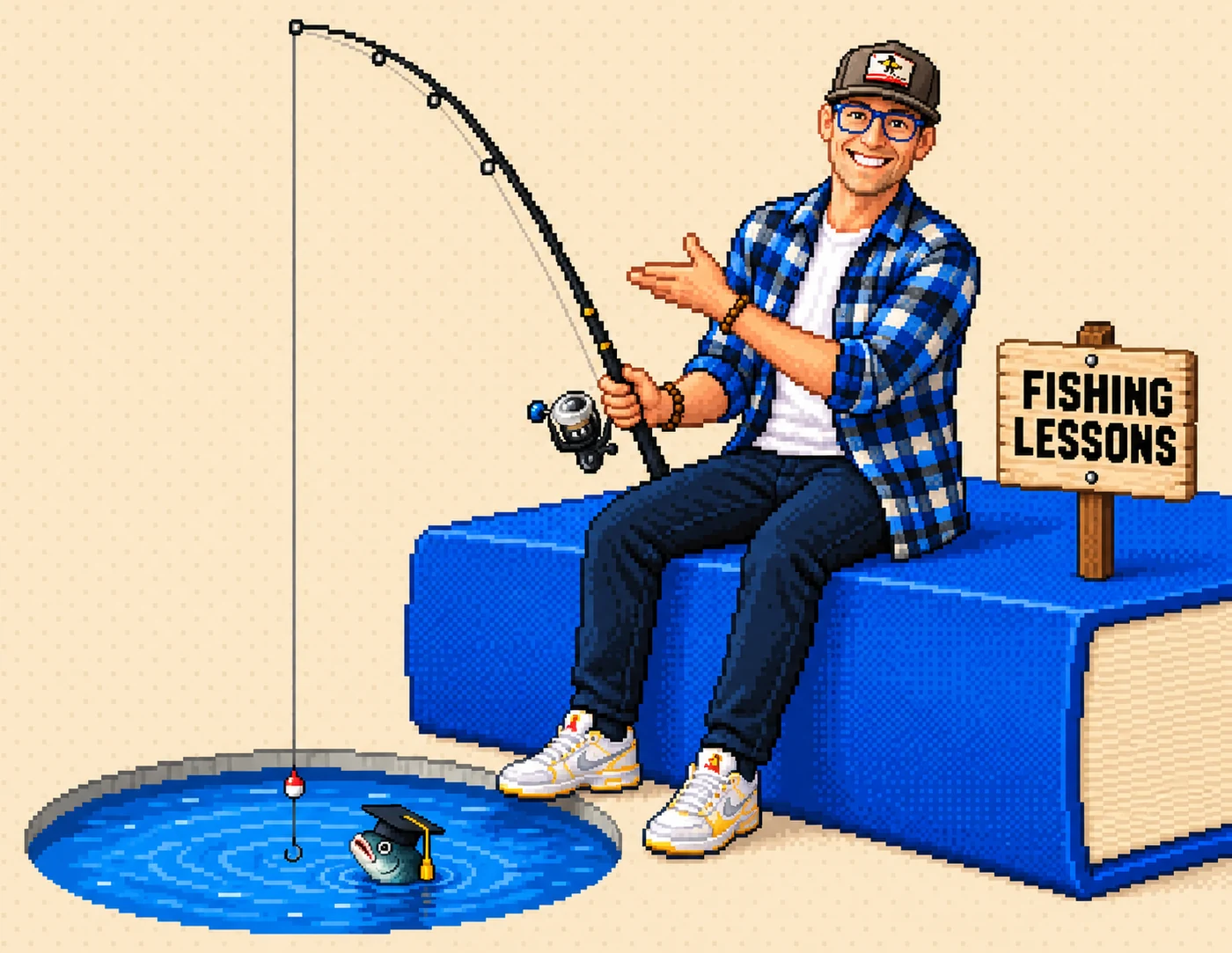
Pixel art of Steve sitting on a giant book, fishing rod in the water, a graduate fish on the line and a FISHING LESSONS sign.

Press Start Together

Not a tech project. A connection project.

A game design workshop you run with the kids in your life, then build together with AI. You're the producer. They're the designers.

How it started: waiting for hot chips.

The booth at the restaurant had terrible video games in it, so my niece Harper and I designed our own instead: a character, some rules, the baddies, how you win. I typed it into Claude on my phone and by the time the chips arrived there was a working game called Koala Trail.

Halfway through the build Harper said "this is taking a long time". My brother and I laughed, thinking about how long Super Mario took. Her generation will never know the analogue world or the time things used to take. That's cool, and it's also exactly why they need us in the room.

Game 01
Koala TrailDesigned by Harper, over hot chips.
Game 02
Harley's Dino RacerBuilt with Harley. The other kids ask to play "Harley's game".
Game 03
Snag HoundDesigned start to finish by a nine-year-old. Banjo the sausage dog, falling snags, and Aunty Sharon's mouldy sandwiches.

How a build runs

01

Design it on paper

Character, goal, rules, baddies, scoring.

02

Prompt and build

The adult types, the kid directs.

03

Test it, fix it

Play, break, change, go again.

04

Play it on a phone

Finite, with a game over. Show your mates.

Three lanes

Ages 3 to 6

Littles

They draw the character and pick the rules. You build it overnight. They wake up to their game.

Ages 6 to 14

Middles

The full workshop, worksheets and all. You build together, or they drive the changes.

Teens

Bigs, uncapped

They run their own workshop and learn to vibe code themselves.

Ways in · in development

Business for kids

Problem-first entrepreneurship.

Most kids' business programmes start with "invent a product". I start the other way round. Go and talk to a real business. Ask what hurts, what wastes time, what costs money. Build something small and useful, with AI if it helps. Take it back and ask if it helps. Offer to help.

Will it make them a billion-dollar company? No. It'll teach them how to talk to an adult they don't know, how to diagnose a real problem, how to build something, how to sell it and how to take a no. Entrepreneurship is the vehicle. Capability and connection are the point.

I mentor Year 8s on exactly this. If your school, your kid or your programme wants it, let's talk.

The five things I won't let a room of teenagers leave without

  1. Everyone is a human being. The basic rules of connection apply regardless of who they are.
  2. Say yes to the thing that scares you, with enough underneath you to hedge the risk, then figure it out.
  3. You don't have to rock at everything. Work out what you rock at as early as you can.
  4. Be dangerous at enough things, use AI for the rest, and pay someone who rocks at what you suck at.
  5. Learn how money works before you need to.

For schools and significant adults

Bring it to your room.

Be the significant adult.

Get the guide, book a workshop, or tell me what your kids need. I read every one myself.

Let's talk