Pass it on · Schools and education providers · Free

Get me in front of your students.

I started a business at seventeen out of the school kitchen, selling gingerbread houses to the teachers. Nobody had shown me how. So I come in, for free, and show your students what figuring it out actually looks like: business, life, tech, solving real problems. Then I sit with them and work through it.

Always free
Steve, hand up, sitting at a school desk in a blazer and tie.

Why free

Because somebody should have.

Schools are doing their best with a world that changes faster than a curriculum can. Preparing kids for it takes people who've gone and figured it out coming back to pass it on. The adults who turned up for me at school made the difference. This is me turning up.

There's no catch, no upsell and no pitch to the kids. If your school wants me back, ask.

$0and it stays that way

No fee, no pitch, nothing for anyone to buy at the end.

The sessions

Four ways in. Pick what your cohort needs.

Problem-first entrepreneurship

Most business subjects start with "invent a product". I start with a real business and a real problem. Students learn to walk in, ask what hurts, diagnose it, build a small fix (with AI if it helps), take it back and offer to help. It teaches connection, diagnosis, building, selling and taking a no. Entrepreneurship is the vehicle. Capability is the point.

Years 8 to 12, commerce and business cohorts, uni and TAFE.
60 to 90 minutes, or a term-long mentoring block.

The reality of business

What it's actually like to start, run, sell and close things. The bits nobody puts in the textbook: the $1,000 quote that became $20,000, the ice cream shop that wouldn't let me grieve, the money mistakes I'd save you from. Honest, funny, and useful.

Years 10 to 12, uni and TAFE business students.
45 to 60 minutes.

Life skills nobody hands out

The five things I won't let a room of teenagers leave without. Everyone is a human being, so the rules of connection apply. Say yes to the scary thing with enough underneath you. Work out what you rock at. Be dangerous at enough things and use AI for the rest. Learn how money works before you need to.

Years 8 to 12.
45 to 60 minutes.

Solve it with tech

A live build. Students bring a problem from their school, their part-time job or their family's business. We work out what's actually going on and build a small working thing with AI in front of them. They leave knowing they can do it too.

Years 9 to 12, uni and TAFE.
90 minutes, BYO device.

How I run a room of teenagers

No lecture. No slides about "the future of work".

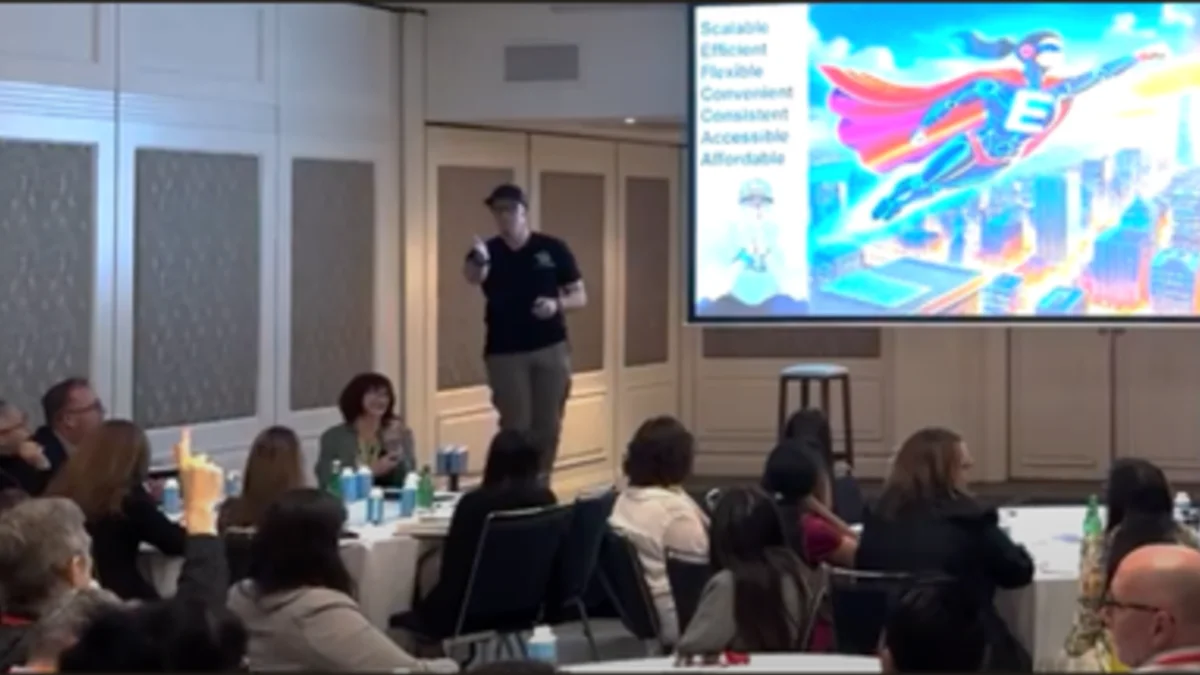
I ask questions, I tell the truth, and I let them be the hero of their own story. The same rules apply to Year 9s as to executives: get to what matters, make it make sense, give them something to do. The kids I build video games with have taught me most of what I know about keeping a room's attention.

Steve running a workshop room.

For parents and staff

The adults get a session too.

A talk for parent evenings and staff days on presence, technology as a bridge instead of the enemy, and what a significant adult can add to a kid's life. Plus Press Start Together as a parent-and-kid workshop for schools, libraries and community groups.

PhotoSteve and the kids building a game
Press Start Together

A game design workshop you run with the kids in your life, then build together with AI. Parents produce. Kids design.

Uncle Steve →

Proof

Rooms I've stood in.

Balwyn High School
Koonung Secondary College
Haileybury College
Monash University
Chisholm TAFE

How it works

Four steps and I'm in the room.

01

Send the details

Tell me the year level, the subject, the date and what you'd like them to walk out with.

02

I get back to you

Quickly, and by me. We pick the session and shape it for your students.

03

I turn up

In person around Melbourne, online anywhere.

04

Then it's theirs

Every session ends with something they can actually go and do.

What rooms say

The same thing works on Year 9s as on executives.

These comments are from adult audiences, because that's where the written feedback comes from. The approach in a classroom is identical: get to what matters, make it make sense, give them something to do.

"Legendary! Lit me up and opened my eyes to a new way."

TraceyKeynote attendee

"Engaging and educational."

RadhikaUniversity of Sydney

"Great energy and more valuable than the NIDA workshop."

KelseyUNSW

Got a class that needs to hear it from someone who's done it?

Tell me who they are and what they're stuck on. I read every one myself.

Book a school session